Why is the subject of hernia recurrence so important ?
“A surgeon can do more for the community by operating on hernia cases and seeing that his recurrence rate is low than he can by operating on cases of malignant disease”
Sir Cecil Wakely – President: Royal College of Surgeons (Eng) 1948
There are always risks associated with ANY surgery but the hernia repair performed at this Centre enables us to be more confident than ever against recurrence – for life. Unfortunately, repairs performed elsewhere have historically not proven this reliable and failures can all too often occur at any time in the patient’s lifetime.
Difficulties with older methods
When a hernia repair operation breaks down (i.e. a recurrent hernia), further repair operations are more difficult than the first. To make matters worse the chances of success actually diminish with each successive attempt at repair.
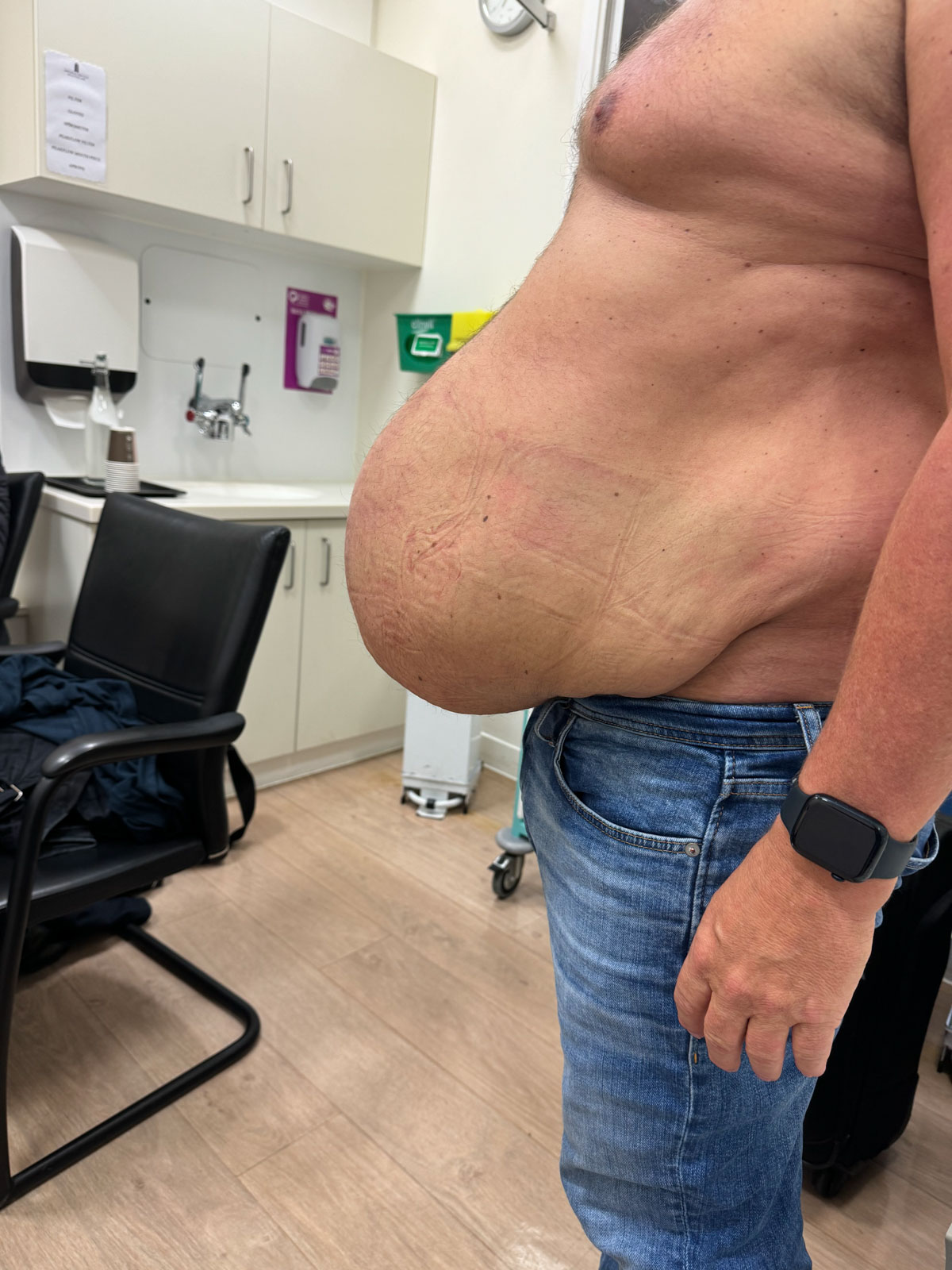
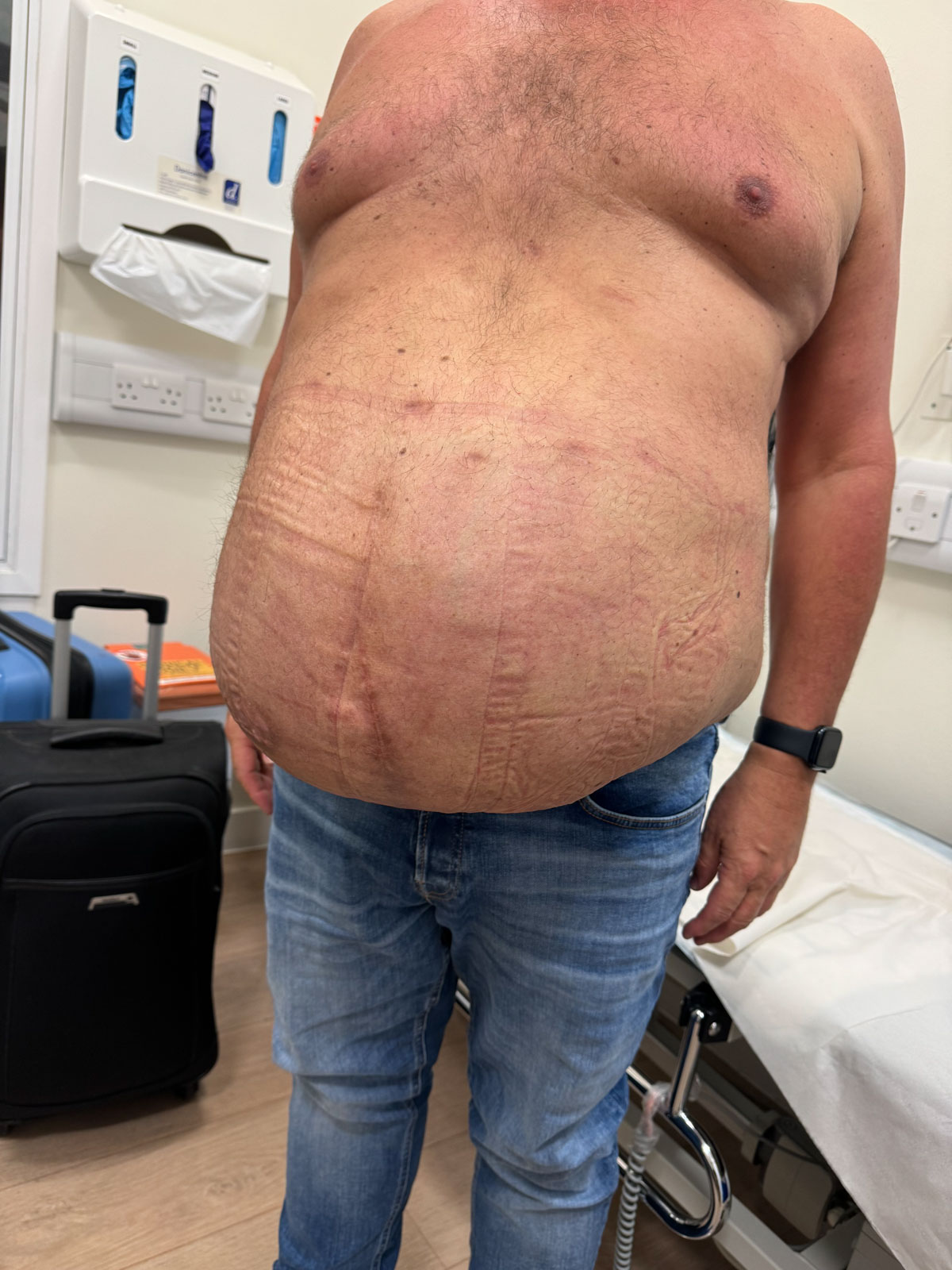
The same is true of the breakdown of the scar in the abdominal wall from an incision for any previous operation. This is called an incisional hernia. Thus the recurrent hernia and the incisional hernia are very similar in many respects, including the difficulties in effecting a reliable repair.
There are also cases of multiple hernias and of combinations of all the above, such as multiple, recurrent hernias or recurrent incisional hernias. These cases pose many difficulties to most surgeons and are not always successfully repaired. Specialised experience can prove very helpful. Not only does experience from having performed thousands of hernia repairs help, but success comes from understanding the anatomy of the area, the principles of the surgery, the characteristics of different types of meshes and tailoring the repair and technique to the individual.
Our operations are performed with a variation of the tension-free mesh techniques described elsewhere in this site, with very similar success rates.
The key principle of repairing recurrent hernias is to use a larger mesh reinforcement incorporating and strengthening all the surrounding tissue making it almost impossible for a further recurrence to take place. In effect, the whole area of abdominal wall surrounding the hernia site(s) becomes reinforced not just the area(s) previously operated upon.
We thus eiminate the causes of later, multiple recurrences described above.
Is recovery much slower?
For a large majority of recurrent hernias, the recovery is no different compared to hernias being repaired for the first time. As the repair is ‘tension-free’ (in the same way as is described earlier for first time hernia repairs), there is surprisingly little discomfort and recuperation is just as rapid.
Patients are expected to be as active as possible from the first day, e.g. walking 1 to 2 miles, and return to completely normal routine often in 7-10 days, including playing light sport like golf and tennis.
What about really complex cases?
Depending on how complex the case, we can still perform some recurrent hernia repairs under local anaesthesia, although the more problematic and most complex cases of neglected hernia, can be performed by laparoscopic surgery.
Factors that decide the approach include the type of hernia, how many times it has already been repaired, how large it is, and factors such as age and other medical conditions.
In the vast majority of cases, even the more complex ones, the patient still leaves the same day. Only in the most challenging of cases is there a need for overnight hospital stay. A prior examination will determine which is the most suitable course for each case.
The extremely large number of hernia cases seen each year at The British Hernia Centre, added to the experience of tens of thousands of cases we have already performed, puts us in a singular position to offer this superior technique of repair for even the most complex of cases.
For the connection between Recurrent Hernia and Testicles, see the section on Testicular Involvement