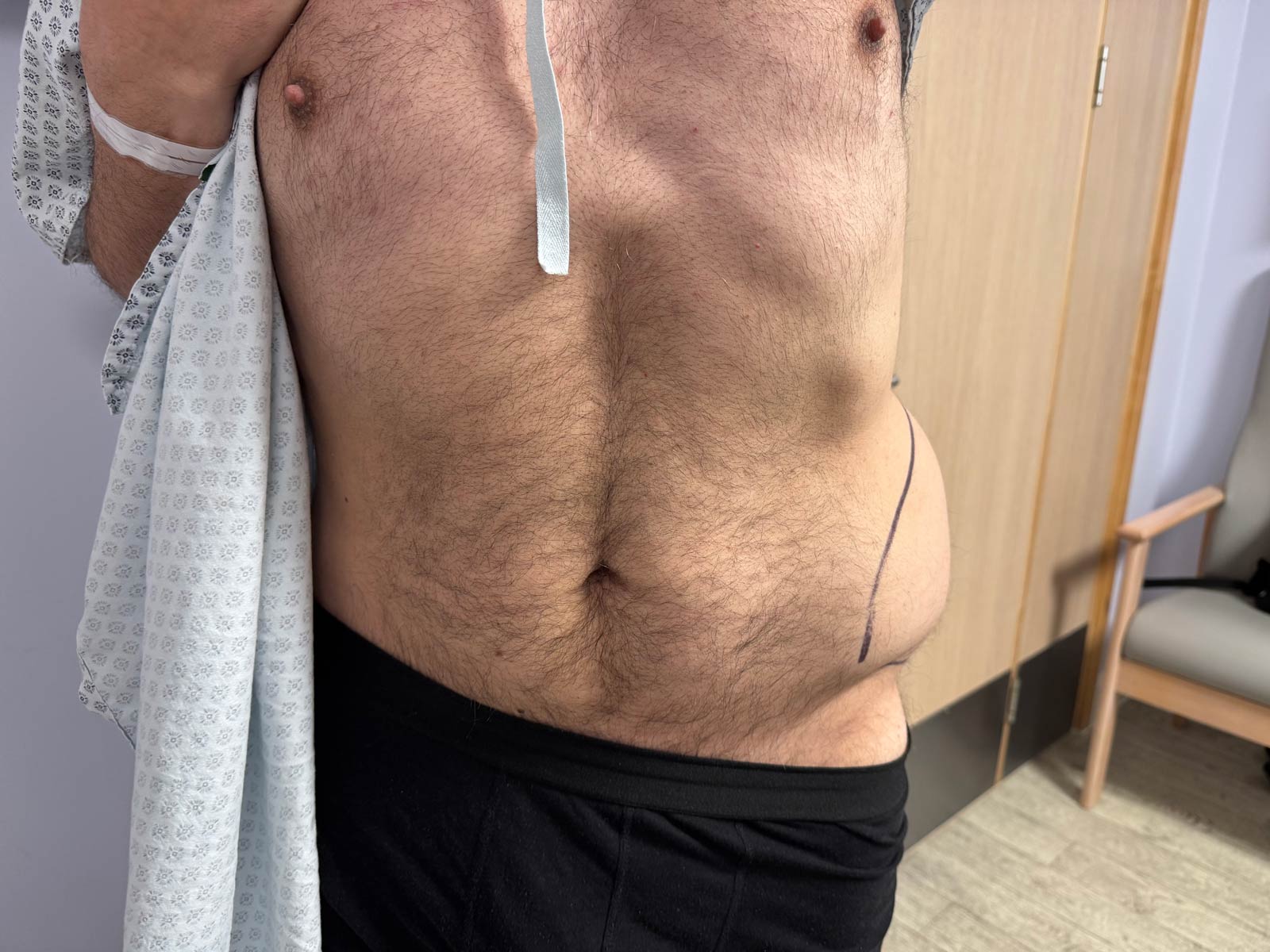
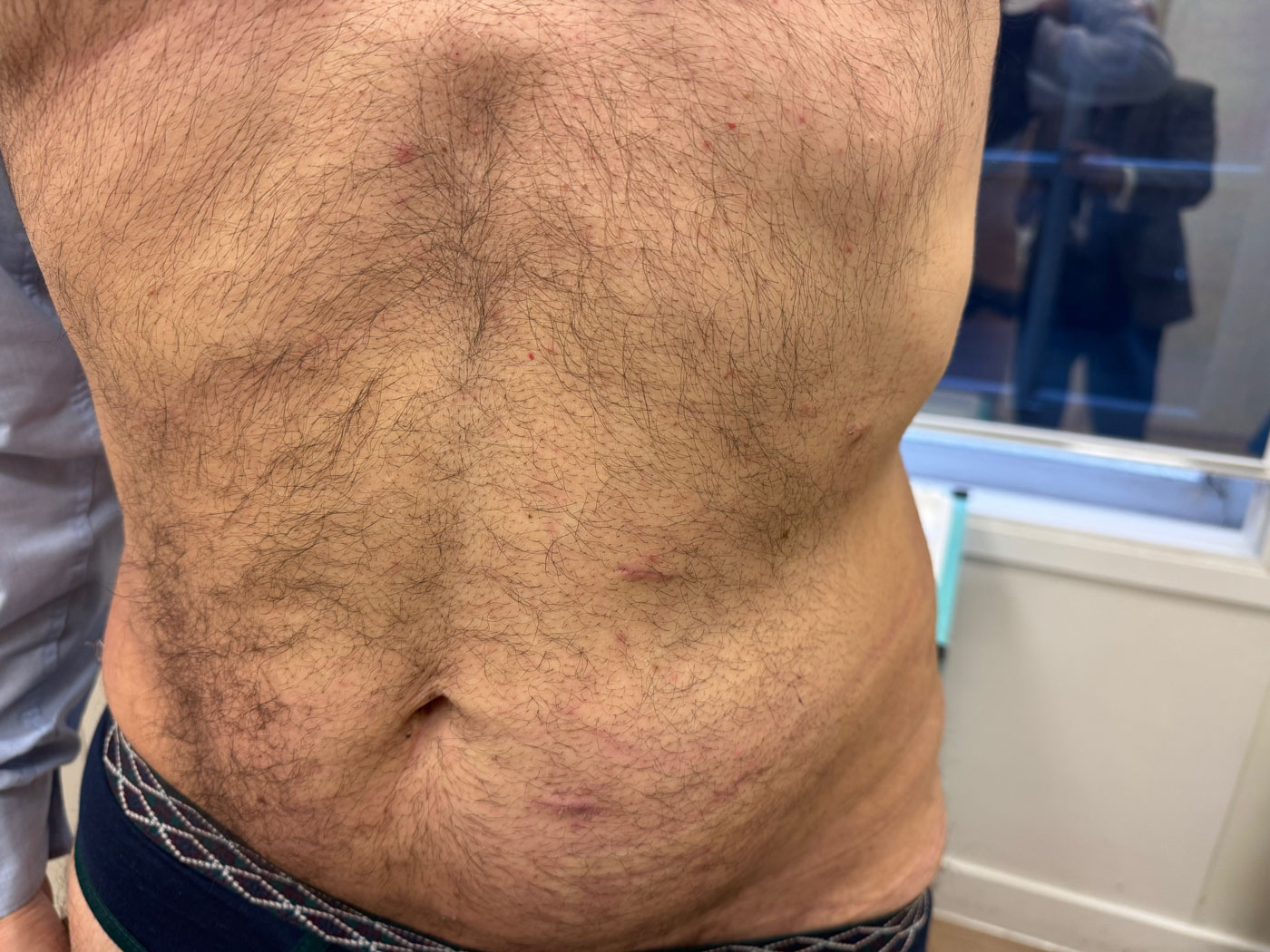
A lumbar hernia is a rare type of hernia that develops in the flank or lower back. Unlike more common hernias, such as inguinal or umbilical hernias, lumbar hernias often occur following previous surgery or significant trauma, although they can occasionally develop naturally through weak areas in the muscles of the back.
Because these hernias are uncommon and can become increasingly difficult to repair as they enlarge, early specialist assessment is recommended.
What Is a Lumbar Hernia?
A lumbar hernia occurs when fatty tissue or part of the intestine pushes through a weakness in the muscles of the lower back or flank.
Most lumbar hernias are secondary to previous surgery or major trauma, such as a road traffic accident. Less commonly, they develop naturally through areas of weakness in the back known as the superior (Grynfelt-Lesshaft) or inferior (Petit) lumbar triangles.
Symptoms of a Lumbar Hernia
The most common sign is a lump or swelling in the flank or lower back.
Some patients experience:
- A visible bulge that becomes more noticeable when standing or straining
- Discomfort or aching in the lower back or side
- Pain during physical activity
- A feeling of weakness around the affected area
Symptoms vary depending on the size of the hernia and the tissue involved.
Should a Lumbar Hernia Be Repaired?
Lumbar hernias do not usually improve without treatment. Where possible, surgery is often recommended before the hernia becomes larger. As the defect increases in size, the surrounding muscles may weaken further, making repair more challenging.
Large lumbar hernias often require more complex reconstruction techniques and specialist surgical expertise.
Lumbar Hernia Repair
Repairing a lumbar hernia can be technically demanding because there is often limited muscle available around the defect to support the repair.
For this reason, specialist techniques may be required, particularly for larger hernias or those that have developed following previous surgery.
Mesh reinforcement is commonly used to strengthen the area and reduce the risk of recurrence.
Open or Laparoscopic Surgery?
Both open surgery and laparoscopic (keyhole) surgery can be effective for lumbar hernia repair.
Laparoscopic surgery may offer benefits such as shorter hospital stays and a quicker recovery for suitable patients. However, the most appropriate approach depends on the size of the hernia, its location and the individual patient's circumstances.
Your surgeon will recommend the technique most likely to achieve a durable repair.
Why Choose The British Hernia Centre?
Lumbar hernias are uncommon and often require specialist assessment and treatment.
Established in 1989, The British Hernia Centre has more than 37 years of experience in hernia surgery and is dedicated exclusively to the diagnosis and treatment of hernias, including complex and less common conditions.
If you have noticed a lump in your flank or lower back, or have been diagnosed with a lumbar hernia, contact The British Hernia Centre to arrange a specialist consultation.