A hiatus hernia, also known as a hiatal hernia or oesophagus hiatus hernia, occurs when part of your stomach moves upwards through an opening in the diaphragm called the hiatus and into the chest.
Unlike an abdominal wall or groin hernia, there is usually no visible lump. Instead, symptoms often affect the upper digestive system and can be closely associated with acid reflux or gastro oesophageal reflux disease (GORD).
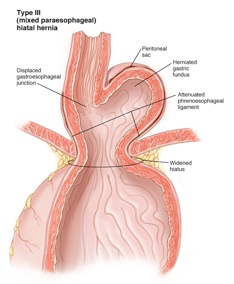
What are the symptoms of a hiatus hernia?
Hiatus hernia symptoms vary considerably. Some people experience few problems, while others develop persistent reflux and digestive symptoms that affect everyday life.
Common symptoms can include:
- Acid reflux or heartburn
- Burning or discomfort in the chest
- Regurgitation of food or stomach acid
- Difficulty swallowing
- Persistent coughing
- Symptoms that become worse after eating or when lying down
Chest pain can sometimes be severe and may spread towards the back. Because chest pain can have many causes, new or unexplained pain should always be medically assessed.
Why does a hiatus hernia cause acid reflux?
Normally, the diaphragm and the valve mechanism at the lower end of the oesophagus help prevent stomach contents travelling upwards.
When part of the stomach moves through the hiatus, this mechanism may become less effective. Stomach acid can then flow back into the oesophagus, causing heartburn and other symptoms of reflux disease.
Long-term acid reflux can damage the oesophagus and may also affect the teeth and lungs. Persistent symptoms should therefore be properly investigated rather than simply managed indefinitely with over-the-counter remedies.
What can be done to avoid a hiatus hernia?
Whilst there is nothing that can be done to prevent the occurrence of a hiatus hernia (hiatal hernia), there are three ways of dealing with the symptoms.
1. Lifestyle
If certain foods trigger symptoms, avoiding them can significantly reduce discomfort. It also helps to avoid heavy meals before bending, lifting, or strenuous activity, as these can worsen symptoms.
Managing meal timing can also make a difference. Eating smaller, more frequent meals and avoiding food or drink before bed may help reduce flare-ups.
Sleeping position can also play a role. Raising the head of the bed slightly (for example, using blocks under the bedposts) can help prevent stomach contents from rising by using gravity.
These lifestyle changes can often help manage symptoms without medication or surgery, although they may not be effective for everyone and can take some adjustment to maintain.
2. Medicine
There are several medicines available to help manage the symptoms of hiatus hernias (hiatal hernias). Most work by reducing stomach acid or neutralising it, and different types may suit different patients. Your doctor can recommend an appropriate option and adjust it if needed.
Persistent or long-term indigestion should always be assessed by a doctor. It is not advisable to rely on self-medication, even with over-the-counter remedies, as proper diagnosis is important.
Medication can be very effective in controlling symptoms and improving comfort, but it may not be suitable or desirable as a long-term solution for everyone.
3. Surgery
Surgery for a hiatus hernia should not be confused with procedures used to repair abdominal wall hernias, as the techniques are different.
Surgery should only be considered after a full specialist assessment and a confirmed diagnosis. In many cases, symptoms can be significantly improved or resolved by strengthening the valve mechanism between the oesophagus and stomach. This is done by tightening the hiatus so the stomach remains in its correct position below the diaphragm, helping to prevent reflux and related symptoms.
The British Hernia Centre
The British Hernia Centre provides specialist assessment and treatment for hiatus hernias (hiatal hernias), focusing on accurate diagnosis and tailored management plans. This includes guidance on lifestyle changes, medication options, and, where appropriate, minimally invasive keyhole surgery to correct the underlying problem.
We typically perform hiatus hernia surgery using a keyhole (laparoscopic) technique through small incisions. Patients are usually in hospital for one night and can often return to normal activities within about a week, with a significant reduction in symptoms. The aim is to relieve symptoms such as reflux and heartburn and help patients return to normal daily activities as quickly and safely as possible.
How can I reduce hiatus hernia symptoms?
There are several foods and other matters that are commonly associated with aggravating the symptoms of hiatus hernias (hiatal hernia). Before considering medicines or surgery, it is often worthwhile making changes to avoid such things as:
- Hot (too hot) foods and drinks
- Spicy foods
- Acidic and acidifying foods
- Fizzy drinks & fruit juice
- Foods which are difficult to digest
- Smoking
- Alcohol
- Being overweight
- ANYTHING that gives you heartburn / indigestion
We are asked:
Q: “Is antacid medication likely to work in the long term because nothing I take makes any difference to the discomfort and pain. I wake up with acid in my throat which is horrible and I take medication, but it does not go away. Do antacids really make any difference once a hiatal hernia has developed?”
A: Antacids are used to treat symptoms, not the cause. By the time you feel the need to take them, damage has been done by the very act of burning you. At worst, acid reflux, especially in your sleep can have the worst imaginable outcome. Antacids are wonderful, but in most cases, are NOT the long-term answer.
What to do next
We advise people who contact us from all over the world that the best course of action is to have the endoscopy and x-ray tests performed locally and then contact us to advise the most appropriate treatment, including surgery (if that is what is required). Your own family physician should be able to arrange the necessary ‘basic’ tests.
If those tests indicate that a hiatus hernia (hiatal hernia) exists, then contact The British Hernia Centre with those results and we will be happy to advise on how best to proceed.
For a completely free, personal opinion on your own hiatus hernia, give us some key details here. We will consider what you tell us and get back to you with our opinion.